
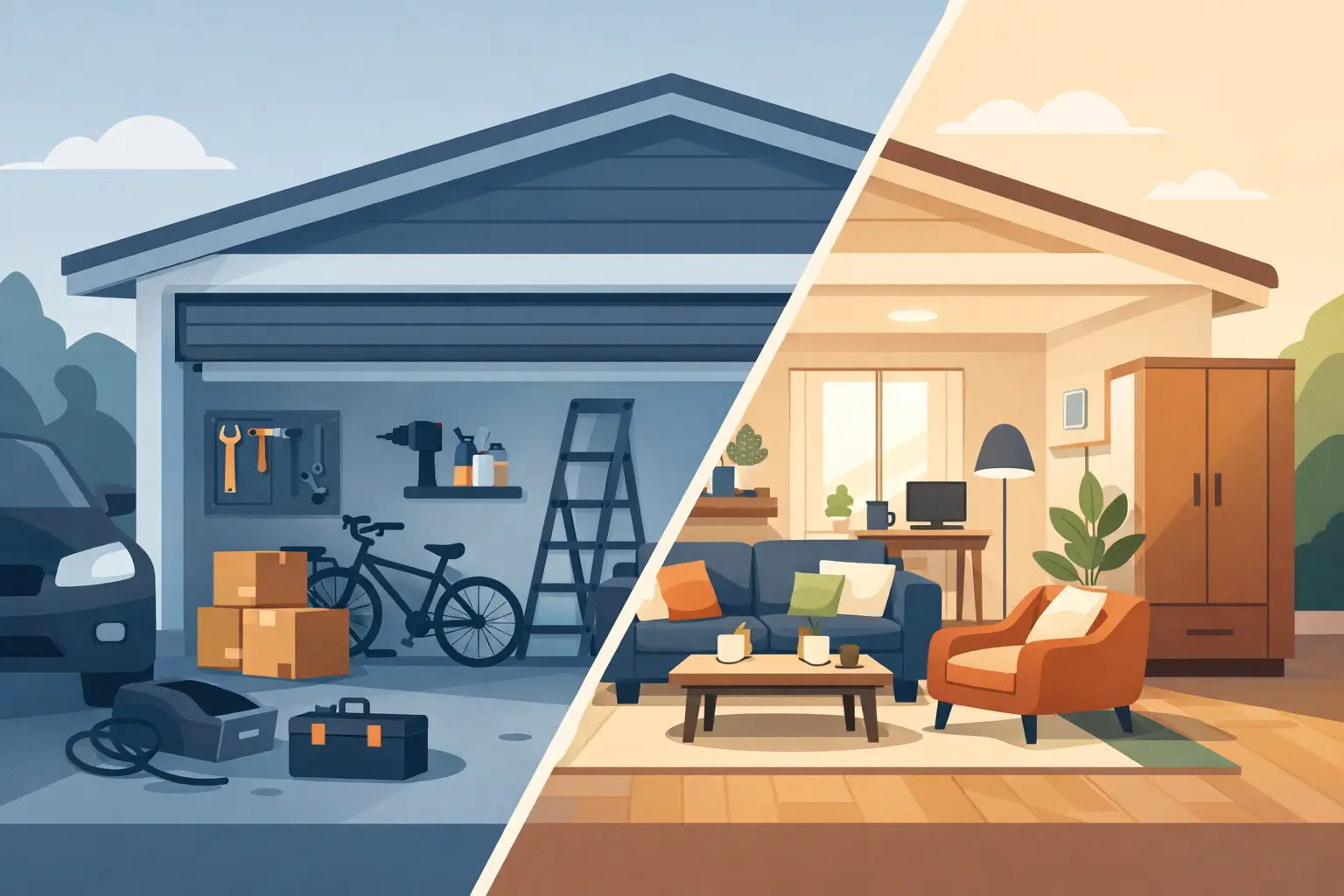
When a garage becomes a holding area for boxes, bikes and things you meant to sort last year, it is fair to ask whether that square footage could be doing more. For many homeowners, is a garage conversion worth it becomes less of a design question and more of a practical one. If your home feels tight, but moving feels expensive and disruptive, converting an underused garage can be a sensible way to gain proper living space.
The short answer is yes, a garage conversion can absolutely be worth it. But it is only worth it when the new room solves a real problem in your home, suits the way you live, and is designed and built properly. Like any building project, the value is not just in gaining space. It is in gaining the right kind of space.
Is a garage conversion worth it for most homes?
In many cases, yes. A garage conversion is often one of the more straightforward ways to expand your usable floor area because the main structure is already there. You are not always starting from scratch with foundations, walls and a roof, which can make it more cost-effective than a full extension.
That said, the best results come when the garage is genuinely underused. If you never park in it, and it has become a storeroom with a garage door, there is usually a strong argument for converting it. A well-planned conversion can turn that neglected part of the house into a home office, playroom, utility room, extra bedroom, snug or even a ground floor shower room setup for multi-generational living.
For homeowners in Essex, where moving costs can be significant and house prices make upsizing a major financial step, making better use of the footprint you already have often makes sound sense. The appeal is not only financial. It is about avoiding the upheaval of leaving a street, school catchment or area that already suits your family.
What makes a garage conversion good value?
A garage conversion tends to offer good value when it improves day-to-day life in a way you feel immediately. Extra space has a value on paper, but it also has a value in how your home functions. If one new room removes daily friction, the project can feel worthwhile very quickly.
A dedicated office is a good example. If you work from the dining table or a cramped spare corner, a quiet, insulated workspace can improve both productivity and family life. The same applies to a family room that gives children room to spread out, or a bedroom that frees up pressure elsewhere in the house.
There is also the question of resale value. A quality garage conversion can add appeal to buyers, especially if it creates flexible living space that feels like a natural part of the home rather than an obvious afterthought. Buyers tend to respond well to useful square footage, good natural light, proper insulation and a finish that matches the rest of the property.
Still, value is never guaranteed in exactly the same way for every house. The layout, parking situation, local buyer expectations and standard of workmanship all matter.
When is a garage conversion not worth it?
This is where a more balanced view matters. Sometimes keeping the garage is the better decision.
If off-street parking is limited and the garage is the only secure place for a vehicle, losing it may count against you. On some roads, especially where parking is already difficult, a converted garage can create a new problem while solving another one. In those cases, buyers may see the loss of parking as a drawback.
It may also be less worthwhile if the garage is too small to convert into comfortable living space without awkward compromises. Some older garages are narrow, dark and poorly connected to the rest of the house. They can still be converted, but if the end result feels squeezed or isolated, the investment may not deliver what you hoped for.
Another issue is specification. A cheap conversion that skips proper insulation, ventilation or structural checks can become expensive later. If the room is cold in winter, stuffy in summer or clearly separate in character from the rest of the house, it rarely feels like money well spent.
The hidden difference between extra space and useful space
This is the point many homeowners miss. A garage conversion is not worthwhile simply because it adds a room. It needs to add a room that your house actually needs.
For example, converting a garage into a second sitting room may be useful in a busy household, but less so if you already have enough reception space and are really short on storage or utility space. In contrast, a conversion that creates a combined utility and boot room near the kitchen might transform how the whole ground floor works.
Practical design matters just as much as square footage. Access, window placement, heating, floor levels and how the new room links to the rest of the property all affect whether the finished space feels right. The best conversions do not feel like converted garages. They feel like they were always meant to be there.
Costs, permissions and practical considerations
A garage conversion is usually more affordable than a larger extension, but it is still a proper building project and should be treated that way. Costs vary depending on the garage type, structural changes required, internal layout, drainage, electrics and finish level.
Integral garages are often simpler to convert than detached garages because they already connect to the main house. Detached garages can still work well, but the use needs careful thought. If you have to cross a garden to reach the room, it may function better as an office, studio or guest space than as everyday family living accommodation.
Planning permission is not always required, but building regulations approval is essential. A conversion needs to meet standards for insulation, fire safety, ventilation, structure and more. If the garage door opening is being infilled, if windows are added, or if the foundations need attention, those details must be handled properly.
This is where experience matters. A garage may look simple from the outside, but getting the levels, thermal performance and structural details right is what separates a durable conversion from one that causes issues later.
Is a garage conversion worth it compared with moving?
Often, yes. Moving home is expensive in ways people sometimes underestimate. There are estate agent fees, legal fees, stamp duty, removals, time, stress and compromise. Even after all that, the new house may still need work.
A garage conversion allows you to stay where you are while solving a specific space problem. If you like your location and your home already suits you in most other ways, adapting it can be the more measured decision.
That does not mean a conversion replaces every need to move. If your house is fundamentally too small, or the layout problems go well beyond one underused garage, a larger extension or broader renovation may be more appropriate. But if the pressure point is a missing office, an extra bedroom, or a lack of family space, a garage conversion can be a very effective answer.
How to judge whether it is right for your home
The clearest way to decide is to ask a few honest questions. What problem are you trying to solve? Do you need another room every day, or only occasionally? Will losing the garage affect parking or storage in a meaningful way? And will the converted space feel fully part of the home?
You should also think about the long term. A room that works for your family now should still make sense in five or ten years. Flexible uses tend to hold their value better than highly specialised ones. A room that can serve as an office, bedroom or snug is often a safer investment than something with a very narrow purpose.
At Essex Loft Extensions, this is usually where a proper conversation helps most. Not every garage should be converted, and not every homeowner needs the same solution. Sometimes a garage conversion is the smartest move. Sometimes a loft conversion, extension or reworking of existing space will give better results.
A worthwhile project is one that improves how you live now without creating avoidable compromises later. If your garage is underused, your home is short on practical space, and the conversion is approached with the right design and construction standards, it can be one of the more sensible improvements you make. The real test is simple: if that space can become a room you rely on rather than an area you ignore, it is usually worth serious thought.